
Modernization of theEmergency Call Systems

The comprehensive decommissioning of the classic analog telephone networks (PSTN/POTS) and the shutdown of 2G/3G mobile networks mark a fundamental turning point. This change is far more than a simple hardware replacement—it requires a complete redesign of the security infrastructure.
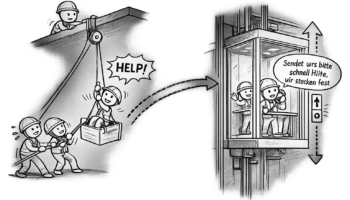
Emergency Call During Network Shutdown

With BinaStar, secure, reliable, and up-to-date into the future. The clock is ticking!

2G is slowly saying goodbye; 3G PSTN & analog signals. The shutdown of old networks is in full swing. Let's act now!

Emergency Call Requirements

According to DIN EN 81-28, the following information should be available at a minimum for quick help in an emergency:

2021

Completed – Shutdown of 3G/UMTS Germany (June)

2028

2G Shutdown Planned (Telekom & Vodafone) – Planned

2030

Planned – Critical 2G Applications, Vodafone Ends; 6G Starts

2028-2032+

Copper Network to Fiber Optic (no fixed end date) – Ongoing

Emergency Call Requirements

According to DIN EN 81-28, the following information should be available at a minimum for quick help in an emergency:

WHO?

Elevator ID, Serial No.

WHERE?

Location, Address, Access

WHAT?

Emergency Call / Test Call / Malfunction

CONTACT

2-Way Voice Connection

Expensive & Complex


  • Many providers offer expensive installation of new hardware (gateway, router, intercom) by elevator technicians.
  • Often not a universal solution—not independent of service providers or elevator manufacturers.
  • Compatibility with the call center not guaranteed—important data is lost during transmission.
  • Silent failures if status messages like emergency battery status are missing.

BinaStar helps with experience & reliability


  • Understanding & Transmission of all old and modern
    emergency call transmission protocols
  • Provide all relevant data (according to DIN EN 81-28) for the call center
    for quick assistance
  • Avoidance of expensive hardware upgrades
  • Years of experience for sensitive emergency call communication –
    manufacturer-independent

Prioritized checklist for operators

1. Inventory (Immediate)

Inventory of all analog and 2G/3G-based connections. Identification of systems without native IP capability.

2. Hardware Migration

Conversion to future-proof 4G-LTE gateways (VoIP/SIP-ready) that meet the EN 81-28 requirements for emergency power supply.

3. Connectivity

Use of M2M multi-operator roaming SIM cards to guarantee maximum network availability without the risk of deactivation.

4. Protocol Selection

Preference for open protocols (LACS or MQTT-encapsulated P100) to avoid vendor lock-in and ensure future security.

5. (Optional) Setup of a new control center

New telephone system with redundancy and maximum reliability.

6. Connection to a control center

In the event of an emergency call, all important data packets (audio, information, etc.) arrive at the emergency call center.

7. Handover & Project Review

Ensuring that all relevant information and master data (emergency release instructions, access codes) are digitally available to the emergency call center in the event of an emergency call, according to DIN EN 81-28, VDMA 15324, and TRBS 3121.

Critical vulnerabilities – BinaStar takes care of them!

Loss of mains power supply

While the old landline powered terminal devices directly via the telephone line, IP infrastructures on-site require their own uninterruptible power supply (UPS).

VoIP adapter unreliability

The use of standard routers (e.g., Fritz!Box) as ATAs is unsuitable for security-critical emergency calls. Connection interruptions and latencies are inherent to the system.

DTMF distortion

Identification data via DTMF tones are so heavily distorted in digital networks by lossy codecs (AMR) that the emergency call center can no longer identify the elevator.

Liability risk: "Silent failure"

The most serious risk for operators: Since analog technology has no native line monitoring in IP environments, the elevator suggests operational readiness while the connection is actually dead. This immediately violates EN 81-28, which requires an automatic test alarm every 72 hours. A failure leads to the immediate loss of the operating permit.

Infrastructure comparison between copper and 4G/LTE

Criterion

Power supply

Signal transmission

Infrastructure

Resilience

SIM card

Analog copper line (legacy)

Power supply via telephone network

Analog tones (DTMF)

Physical direct connection

Vulnerable to earthworks / copper theft

Not relevant

4G/LTE systems (modern)

On-site backup batteries mandatory

Packet-switched data (VoIP/SIP)

Gateway as a digital hub

High via mobile network redundancy

M2M multi-operator roaming SIM recommended

Regulatory guardrails

EN 81-28

Defines the minimum technical standards for elevator emergency call systems:

  • Two-way communication
  • 72h test alarm (automatic)
  • Emergency power buffering: 1h standby + 15 min talk time

TRBS 3121 (2025)

Specifies the Ordinance on Industrial Safety and Health. Key innovations:

  • 12 specific visual and functional inspection points
  • Digital emergency plan per system mandatory
  • "Appointed person" (elevator attendant) with mandatory training
  • Annex 4: Elevator to building interface (fire protection)

VDMA 15324

The "Operational Blueprint" for the emergency call center. The following data must be available digitally:

  • Device ID / Serial No. (Identification)
  • Location & Building Access
  • Machine Room Access
  • Emergency Release Instructions (System Specific)